Cloud Services
Infrastructure That Scales Without Drama
A server that goes down at the wrong moment doesn't just cost you uptime — it costs you the trust you spent months building. We design cloud infrastructure that stays invisible, because the best infrastructure is the kind nobody ever has to think about.
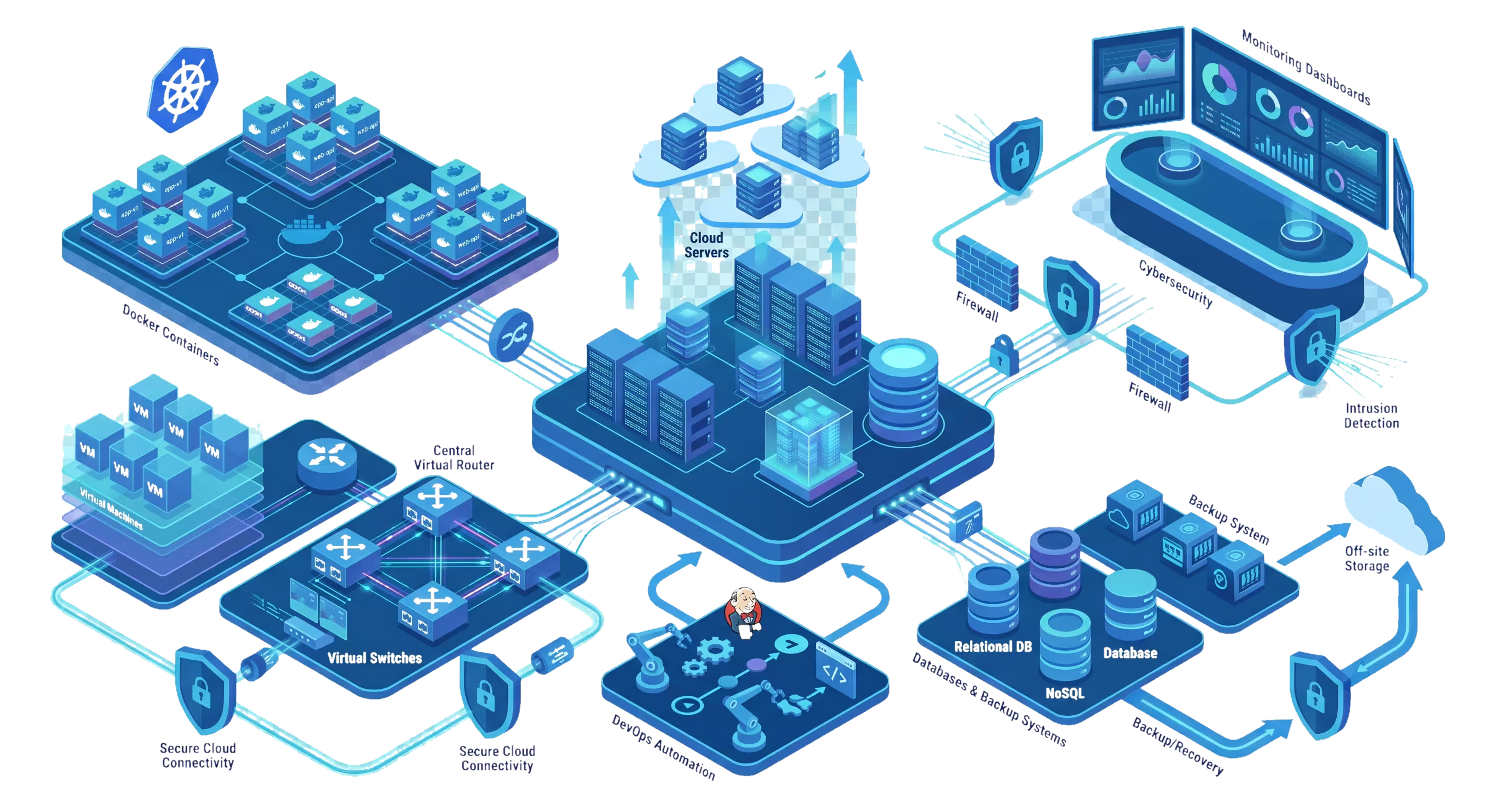
Service Overview
Everything you need to know about how this engagement creates value for your organization.
What is it?
Secure, scalable cloud infrastructure — migration, architecture, and ongoing management across AWS, Azure, and Google Cloud — built for your actual traffic and compliance needs.
Who needs it?
Businesses outgrowing shared hosting, facing unpredictable traffic, or needing the security posture their customers and regulators now expect.
Business Value
Removes downtime risk and unpredictable hosting cost, replacing both with infrastructure that scales automatically and bills for what you actually use.
Key Benefits
- Multi-region resilience that prevents costly downtime
- Serverless and auto-scaling architectures that match cost to real usage
- Enterprise-grade encryption and compliance built in from the start
- Faster deployments through automated, repeatable infrastructure
Why Is Fragile Infrastructure a Risk You Don't See Until It Fails?
Most businesses only discover their infrastructure's weak points during an outage, a traffic spike, or a security audit — all moments when the cost of finding out is highest.
A single traffic spike takes the whole system down
A viral post, a sale, or a seasonal surge overwhelms infrastructure that was never architected to scale automatically, turning a good day into an outage.
You're paying for capacity you don't use
Fixed server provisioning means paying around the clock for peak capacity that sits idle most of the time — a cost that compounds every month.
Deployments are manual and risky
Without CI/CD automation, every release is a manual, error-prone process that a junior mistake can turn into an incident.
Security and compliance are an afterthought
Data encryption, access controls, and audit trails get bolted on reactively after a client or regulator asks, instead of being designed in from the start.
There's no visibility until something breaks
Without monitoring and alerting, the first sign of a problem is often a customer complaint, not a dashboard warning your team caught in advance.
One region, one point of failure
Infrastructure hosted in a single location means a regional outage or provider incident takes your entire business offline with it.
What Properly Architected Cloud Actually Changes?
The right cloud architecture doesn't just prevent outages — it changes how your cost, deployment speed, and security posture behave under real conditions.
Traffic spikes stop being a threat
Auto-scaling infrastructure absorbs sudden demand automatically, so a viral moment becomes an opportunity instead of an outage.
Cost tracks actual usage
Serverless and right-sized architectures mean you stop paying for idle peak capacity — cost scales with real demand, not worst-case provisioning.
Releases become routine, not risky
Automated CI/CD pipelines turn deployments into a repeatable, low-drama process, cutting both release time and the chance of human error.
Security and compliance are provable, not assumed
Encryption, access controls, and audit logging are built into the architecture, so a compliance question gets a documented answer instead of a scramble.
Where Does the Return Actually Come From?
The return on proper cloud architecture shows up in avoided downtime cost and a hosting bill that finally matches real usage.
Avoided downtime cost
multi-region, auto-scaling infrastructure prevents the revenue and reputation loss a single outage causes.
Lower hosting spend
serverless and right-sized provisioning eliminates paying around the clock for peak-only capacity.
Faster time-to-market
automated deployment pipelines mean new features reach customers in hours, not the days a manual release process takes.
Reduced security risk exposure
built-in encryption and access controls lower the likelihood and cost of a breach or compliance failure.
Less engineering time on infrastructure firefighting
a stable, monitored environment frees your team to build product instead of babysitting servers.
How Does the Engagement Actually Run?
The same disciplined process behind every project, applied to this one.
Infrastructure Audit
We assess your current hosting, traffic patterns, and failure points before recommending any architecture change.
Architecture Design
We design the target environment — cloud provider, scaling model, and security controls — matched to your actual load and compliance needs.
Migration Planning & Execution
We plan the cutover to minimize risk, migrating in stages with rollback points rather than a single high-stakes switch.
CI/CD & Monitoring Setup
Automated deployment pipelines and monitoring/alerting are configured so releases and incidents are both handled predictably.
Handover & Ongoing Management
We hand over a documented environment and offer ongoing management, so your infrastructure keeps improving after go-live.
What Actually Happens During the Migration
No black box. Here's what you're involved in, and what you're handed at the end.
- A documented architecture diagram of the target cloud environment before migration begins
- A staged migration plan with rollback points at every step
- CI/CD pipelines configured for your actual deployment workflow
- Monitoring, alerting, and logging wired in from day one
- Security controls — encryption, access management, backups — documented and tested
- A handover package with full infrastructure documentation and a support plan
What's a Realistic Timeline?
Scoped ranges, not vague promises — the exact plan is confirmed after discovery.
Audit & Architecture
1–2 weeksCurrent-state assessment and a target architecture design.
Migration Prep
1–2 weeksStaging environment setup, pipeline configuration, and a rollback plan.
Migration & Cutover
1–3 weeksStaged migration with monitoring at every checkpoint.
Stabilization
1–2 weeksPost-migration monitoring, tuning, and handover.
What Technology Is Behind It?
We pick the right tool for the outcome — not the newest one for its own sake.
Cloud Platforms
Architecture
DevOps & Monitoring
Security
What Results Have We Delivered in Cloud Services?
Real outcomes from cloud services engagements, not manufactured claims.
A growing SaaS platform
The platform was hosted on a single fixed server that repeatedly struggled during traffic spikes, with no automated deployment pipeline and manual, error-prone releases.
We migrated the platform to an auto-scaling cloud architecture with CI/CD pipelines and centralized monitoring, sized to real traffic patterns instead of guesswork.
Traffic spikes are now absorbed automatically, deployments run through an automated pipeline instead of manual steps, and hosting cost tracks actual usage.
Related Services
Capabilities that pair naturally with this one.
Related Solutions
Purpose-built systems that solve adjacent problems.
Who This Is Built For
See how this looks in practice for a specific industry.
Questions About Cloud Services
The practical details behind how we deliver this specific service.
It depends on your existing stack, compliance requirements, and team familiarity. We assess this honestly during the audit rather than defaulting to one provider.
Ready to Stop Worrying About Your Infrastructure?
Tell us what's breaking under load or costing too much to run. We'll show you exactly what a properly architected environment fixes.