Inventory Management
Real-Time Stock Visibility
A stockout costs a sale today. Overstock costs cash every day until it sells. Both come from the same root cause — not knowing your real inventory position. We build systems that replace the guesswork with real-time visibility.
Service Overview
Everything you need to know about how this engagement creates value for your organization.
What is it?
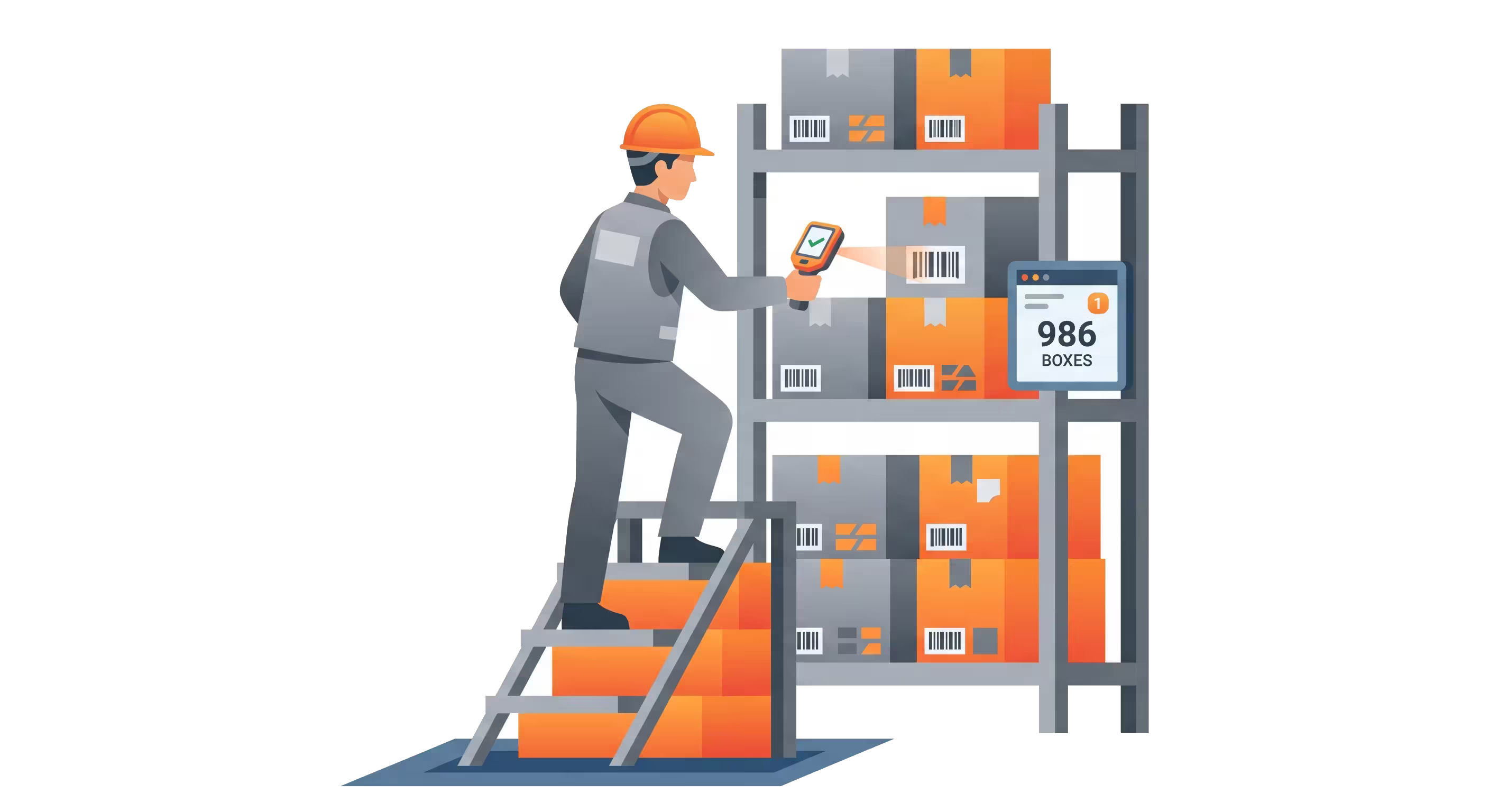
A real-time inventory management system that tracks stock levels, movement, and reorder points across every location and sales channel.
Who needs it?
Retailers, distributors, and manufacturers currently tracking stock through manual counts, spreadsheets, or disconnected point-of-sale systems.
Business Value
Replaces reactive stock decisions — emergency reorders, surprise stockouts — with a live, accurate picture your team can act on before it becomes a problem.
Key Benefits
- Real-time stock visibility across every location and channel
- Automated reorder alerts before a stockout actually happens
- Elimination of manual stock counts and reconciliation errors
- Clear reporting on what's moving, what's dead stock, and why
Why Is Poor Stock Visibility Costing You in Both Directions?
Most businesses lose money on inventory from two opposite directions at once — stockouts that lose sales, and overstock that ties up cash — both caused by the same missing visibility.
Stockouts happen without warning
Without real-time tracking, a popular item runs out mid-sales-cycle, and the business only finds out when a customer asks or an order fails.
Overstock quietly ties up working capital
Without demand visibility, purchasing defaults to over-ordering as a safety margin, tying up cash in stock that sits unsold for months.
Manual stock counts are slow and unreliable
Physical counts across multiple locations take staff hours and are prone to counting errors that throw off every subsequent decision.
Multiple sales channels show different stock numbers
A separate online store and physical POS with no shared inventory feed means overselling an item that's already sold out elsewhere.
There's no visibility into what's actually moving
Without sales-velocity data by SKU, slow-moving and dead stock go unnoticed for months, occupying warehouse space and tying up capital.
Reordering depends on someone remembering to check
Without automated reorder points, purchasing decisions rely on someone noticing low stock manually — a process that fails exactly when things get busy.
What Real-Time Inventory Visibility Actually Changes?
The right system doesn't just track stock — it changes purchasing from a reactive scramble into a planned, data-driven decision.
You always know exactly what's in stock, everywhere
A single real-time view across every location and channel replaces the guesswork of checking multiple disconnected systems.
Reordering happens before a stockout, not after
Automated reorder alerts trigger at the right threshold, so purchasing decisions get made ahead of demand instead of in reaction to a shortage.
Overstock and dead stock become visible early
Sales-velocity reporting by SKU flags slow-moving inventory while there's still time to discount or reallocate it, instead of writing it off months later.
Purchasing becomes a data decision, not a guess
Historical demand data informs how much and when to reorder, replacing the safety-margin over-ordering that used to tie up cash.
Where Does the Return Actually Come From?
Inventory system ROI shows up directly in reduced carrying costs and recovered sales that stockouts used to lose.
Reduced carrying costs
accurate demand visibility lowers the safety-margin over-ordering that ties up working capital in unsold stock.
Recovered lost sales
automated reorder alerts prevent the stockouts that currently lose sales without anyone noticing until it's too late.
Fewer reconciliation hours
real-time tracking removes the need for frequent manual stock counts and the errors they introduce.
Faster identification of dead stock
sales-velocity reporting flags slow-moving inventory early enough to act on it profitably.
Prevented overselling
a synced view across every channel stops selling stock that's already been sold elsewhere.
How Does the Engagement Actually Run?
The same disciplined process behind every project, applied to this one.
Stock & Channel Audit
We map every location, sales channel, and current stock-tracking method before designing the new system.
System Architecture & Reorder Rules
We design the inventory structure and reorder-point logic based on your actual demand patterns and supplier lead times.
Build & POS/Channel Integration
We build the system and integrate it with your existing POS, e-commerce, or warehouse tools so stock data stays in sync automatically.
Data Migration & Testing
We migrate current stock records and test the full reorder and sales-sync workflow against real scenarios before go-live.
Rollout & Staff Training
We roll out to warehouse and sales staff with hands-on training, and monitor the first cycles closely to catch any gaps.
What Actually Happens During the Build
No black box. Here's what you're involved in, and what you're handed at the end.
- A documented map of every location and sales channel before the system is designed
- Automated reorder-point logic configured to your real demand and supplier lead times
- POS and e-commerce integration so stock stays synced across every channel
- Migrated historical stock data for a clean starting point
- Sales-velocity and dead-stock reporting dashboards
- Staff training and a documented admin guide for ongoing use
What's a Realistic Timeline?
Scoped ranges, not vague promises — the exact plan is confirmed after discovery.
Audit
3–5 daysStock, channel, and current process assessment.
Build & Integration
3–6 weeksSystem development and POS/channel integration.
Data Migration & Testing
1 weekHistorical data migration and full workflow testing.
Rollout & Training
3–5 daysStaff training and a monitored go-live.
What Technology Is Behind It?
We pick the right tool for the outcome — not the newest one for its own sake.
Core Platform
Integration
Reporting
What Results Have We Delivered in Inventory Management?
Real outcomes from inventory management engagements, not manufactured claims.
A multi-location retail chain
Each store tracked stock independently with periodic manual counts, causing frequent stockouts on popular items while other locations sat on excess of the same product.
We built a real-time inventory system syncing all locations and the online store, with automated reorder alerts based on actual sales velocity per location.
Stockouts on popular items dropped sharply, excess stock is now redistributed between locations instead of sitting idle, and reordering happens automatically ahead of demand.
Paired Services
Capabilities that pair naturally with this one.
Other Solutions
Purpose-built systems that solve adjacent problems.
Who This Is Built For
See how this looks in practice for a specific industry.
Questions About Inventory Management
The practical details behind how we deliver this specific service.
In most cases, yes — we integrate with your current POS and e-commerce platforms so stock data syncs automatically rather than requiring a full replacement.
Ready to Stop Guessing What's Actually in Stock?
Tell us where stockouts or overstock hurt the most. We'll show you exactly what real-time visibility would fix.